The Castle That Moved Mountains
Rea,
Remember when we visited the Alhambra Palace in Granada? No matter where we walked in the city, we could always look up and see those red walls watching over us from the hilltop. That wasn’t an accident - it was brilliant military strategy.
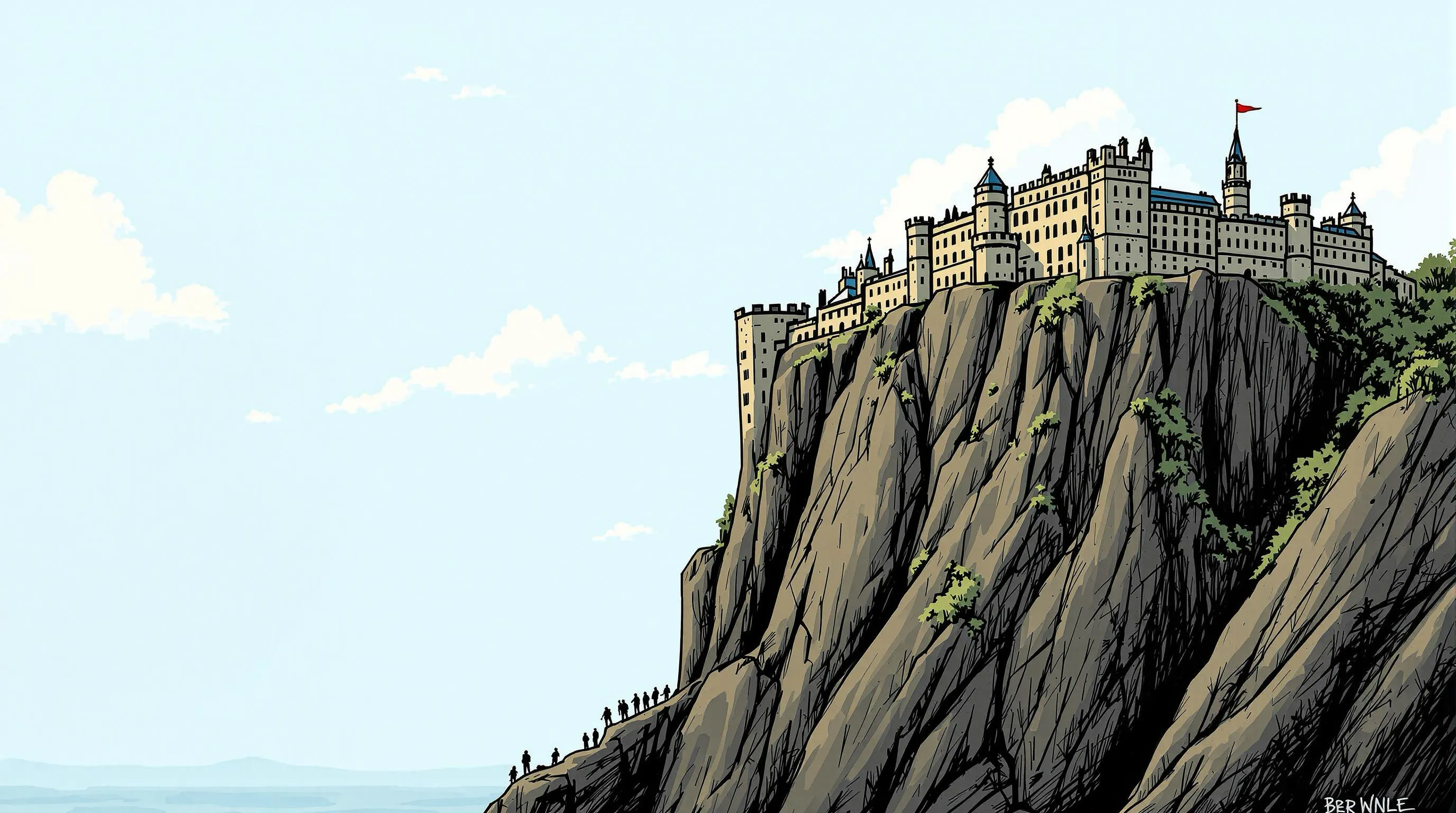
Edinburgh Castle in Scotland follows the same principle. Like the Alhambra, it sits on the highest point for miles around, towering 700 feet above the city on an extinct volcano called Castle Rock. When you look up at it from the streets below, you’ll understand immediately why no army in over 1,000 years has ever fully conquered it.
The builders who chose this spot around 1130 CE were brilliant strategists. Castle Rock has steep cliffs on three sides - imagine trying to climb a 70-story building made of jagged rock while people drop things on you from above. The only way up is a narrow, winding path that forces attackers to approach single-file, making them easy targets.
This smart positioning saved the Scots enormous resources. Most castles needed massive walls on all sides, requiring thousands of workers and years of construction. Edinburgh Castle only needed to fortify one direction - the rest was protected by nature itself.
The strategic advantage was so obvious that many armies took one look and simply left. During the Wars of Scottish Independence in the 1300s, English forces repeatedly tried to capture it. Some sieges lasted months, but the castle’s position made it nearly impossible to starve out or storm successfully.
Even when parts of the castle were damaged in battles, the location itself remained unbeatable. Defenders could see enemies approaching from miles away, giving them time to prepare. Supply lines to the castle were short and easily defended, while attackers had to haul everything up that steep, exposed path.
Today, Edinburgh Castle fires a cannon at exactly 1:00 PM every day - a tradition that started in 1861 to help ships in the harbor set their clocks. That daily boom reminds everyone that this fortress is still watching over the city, just as it has for nearly 900 years.
The castle’s power came from understanding a fundamental principle: position beats size. Instead of building the biggest walls or gathering the largest army, the original builders found the one spot where geography did most of the work for them.
When you visit, you’ll climb that same narrow path attackers once feared. But instead of facing arrows and boiling oil, you’ll see the Crown Jewels of Scotland and get one of the best views in Europe. The castle that once stopped armies now welcomes over 2 million visitors each year.
Sometimes the smartest strategy isn’t to fight harder - it’s to choose your ground wisely.
Love, Abba
P.S. Next time you’re in a modern city, notice how different it is from places like Edinburgh Castle and the Alhambra. Today we build near airports and highways - places that would have terrified medieval planners because they’re so open and accessible!