When Farmers Found Customers
Rea,
You know when we go to H-E-B and walk through different sections - the produce area, the butcher counter, the bakery? Each section feels like a separate little shop under one roof. That setup isn’t an accident. It copies an idea that’s been working for over 400 years.
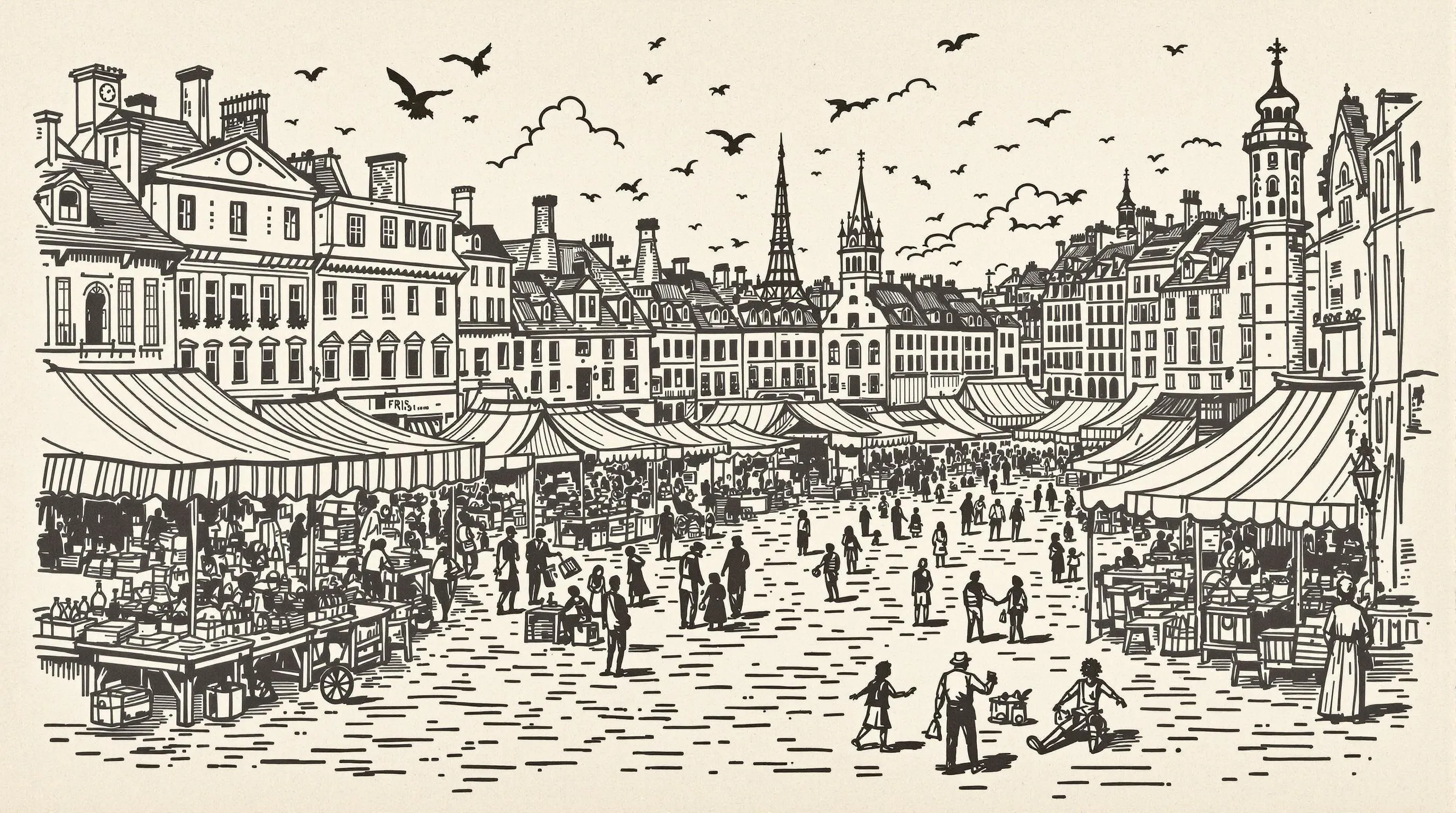
Picture this: you’re a farmer in 1600s France with the most delicious tomatoes in your village. But you only have a dozen neighbors to sell to. Even if they all buy your tomatoes every week, that’s barely enough to live on. Meanwhile, across town, someone else makes incredible cheese, and another person bakes the best bread around. Each of you has something great, but the same problem - not enough customers.
The solution was simple. Everyone agreed to meet in one central place on market day. You bring your tomatoes, the cheese maker brings cheese, the baker brings bread. Suddenly, instead of a dozen potential customers, you each have hundreds of people walking by your stall.
This exact thing happened at the Marché des Enfants Rouges in Paris, which opened in 1615 and still operates today - over 400 years later. Every Tuesday, Friday, and Saturday, dozens of vendors set up their stalls in one courtyard. The fish seller knew everything about the day’s catch. The vegetable farmer could tell you which carrots were sweetest. The bread baker had perfected different recipes for different occasions.
Fast forward to today, and H-E-B basically recreates this same idea under one roof. Walk through the store and you’ll still find a butcher section, a produce section, a bakery section. Even though it’s all one company, they organize it like the old markets because people still want to feel like they’re shopping with different specialists.
Amazon took this same idea and made it digital. Instead of vendors gathering in a town square, millions of sellers list products online. You can buy handmade jewelry from Oregon, books from New York, and electronics from California - all from your computer.
Even Outschool works this way. Aunty Anu teaches math there alongside thousands of other teachers. She’s like a vendor in that 1615 Paris market, except instead of selling cheese, she offers math lessons. Students worldwide can browse her classes right next to art teachers, science teachers, and coding instructors.
The core idea hasn’t changed in 400 years: bring together people who have something good with people who want it. Whether it’s tomatoes in a French market square or math lessons on a computer screen, markets solve the same problem - how do you connect what people make with people who need it?
Love, Abba
P.S. Next time we’re at H-E-B, notice how they organize sections like separate shops. You’re seeing a 400-year-old idea still working!