The Invisible Toll Roads Above Us
Rea,
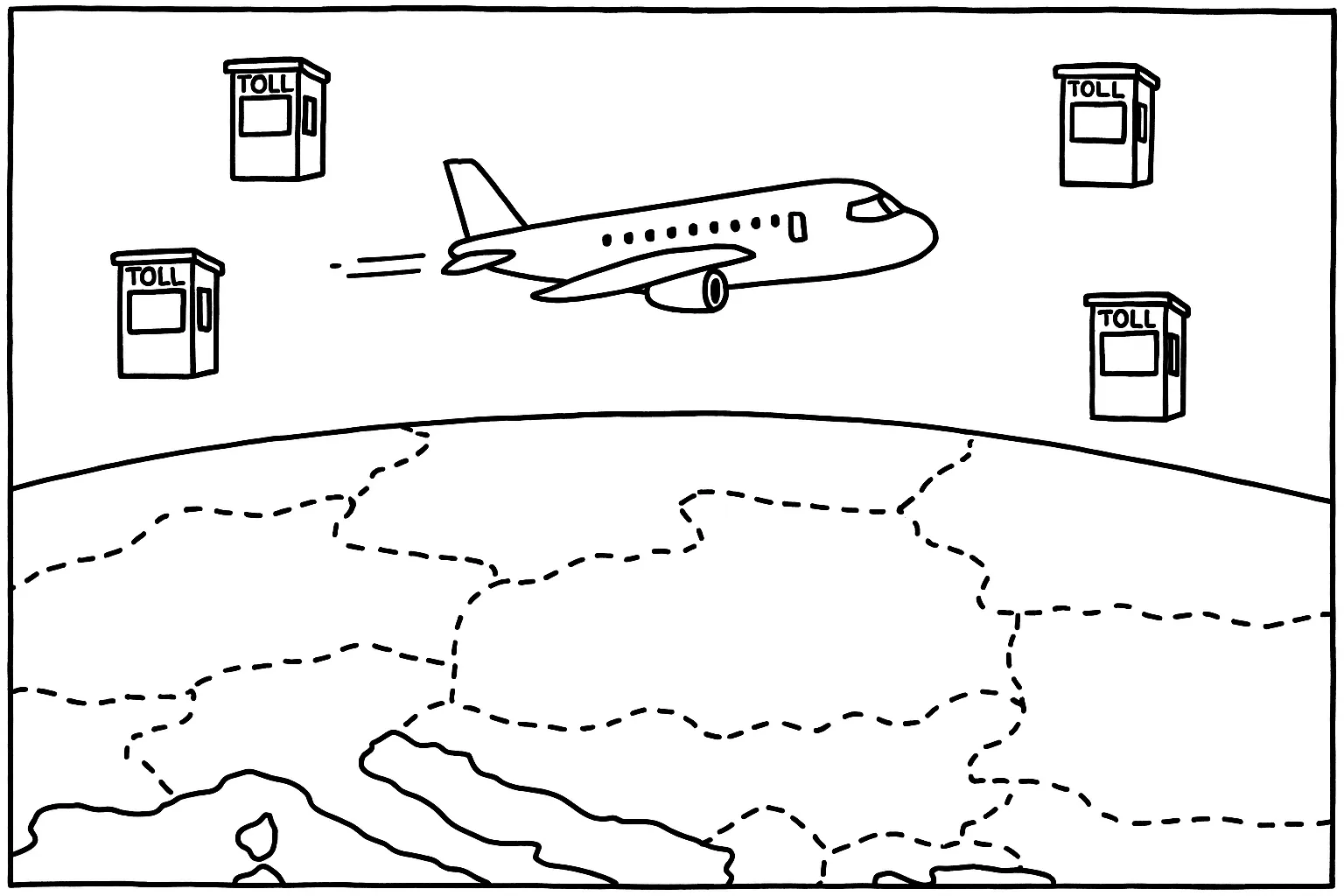
You know how we have that toll tag in our car for when we drive on certain highways? Well, something similar happens when planes fly through the sky.
Remember when we flew to Germany? And that time we went to Spain? Our plane probably flew over France and other countries. Each time we crossed into a new country’s airspace, the airline had to pay a fee - like an invisible toll road 35,000 feet in the air.
Most countries charge airlines between $130 and $700 every time a plane flies through their airspace, even if it never lands.
Here’s where it gets interesting. Afghanistan, a country largely cut off from the global economy, has found an unexpected source of income from this system. They charge a flat $700 fee for every plane that crosses their airspace. With conflicts in other parts of the Middle East making alternative routes dangerous, more airlines are choosing to fly over Afghanistan instead. The result? Afghanistan now earns about $6 million per month just from planes flying overhead.
Airlines constantly calculate whether it’s cheaper to fly the shortest route and pay higher fees, or take a longer path through cheaper airspace. Sometimes flying an extra 200 miles saves thousands of dollars in overflight charges. Russia, strategically positioned between Europe and Asia, increased their airspace fees by 20% during the Ukraine conflict, knowing airlines had limited alternatives.
But here’s a clever twist: many countries waive these fees entirely if your plane actually lands in their territory. It’s like a highway that charges tolls for passing through but lets you drive free if you stop to shop. Countries use this strategy to encourage tourism and business - they’d rather have you visit and spend money than just fly over and pay a small fee.
This hidden system affects every international flight. When airlines plan routes, they’re not just looking at the shortest distance - they’re calculating a complex equation of fuel costs, airspace fees, and political stability. A country’s geography can become a source of power and revenue, even when that country is otherwise isolated from the world economy.
The next time you’re on an international flight, remember that your plane is traveling through an invisible network of toll roads, each with different prices and rules. Geography isn’t just about mountains and rivers - it’s about who controls the empty space above them.
Love, Abba
P.S. Next time we plan a trip, try to guess which countries our plane might fly over. You might be surprised how many invisible tolls we’re paying along the way!