The Cloth That Named a City
Rea,
Remember how we talked about European traders desperately trying to reach India for spices? Well, they found something else just as valuable: a cotton fabric so special that people around the world still call it by the name of the city where I was born.
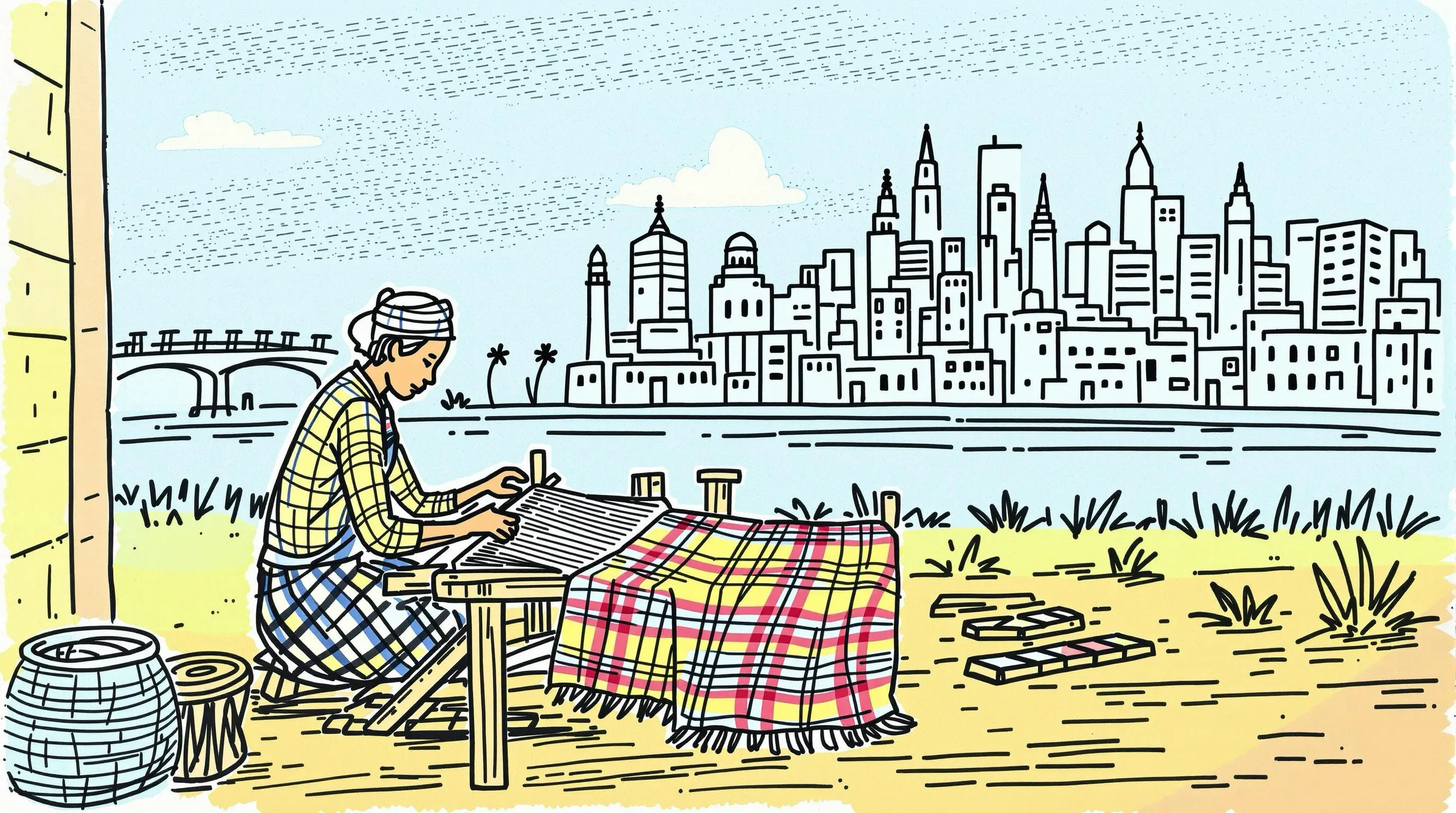
In the early 1600s, British traders arrived at a small fishing village called Madrasapattinam on India’s southeast coast. The local weavers had perfected something remarkable: lightweight cotton with distinctive bumps called “slubs” that gave it a unique texture.
The weavers hand-dyed their cotton with vegetable dyes that created brilliant colors - deep indigos, rich reds, and golden yellows arranged in plaid patterns. Each piece was handwoven, and because of the natural dyeing process, no two pieces were exactly alike.
The British East India Company was so impressed they established a permanent trading post there. To secure enough weavers, they offered a 30-year tax exemption, and within a year nearly 400 weaving families had settled in the area. The fabric became known as “Madras cloth” after the city that produced it.
This cotton was perfect for hot climates - lightweight and breathable. It traveled to the Caribbean, then America. The first madras cloth reached Yale University in 1718. By 1897, Sears was selling madras shirts to American customers.
In 1958, something interesting happened. A textile importer bought 10,000 yards of madras cloth from an Indian exporter who warned him to wash it gently in cold water to prevent the colors from bleeding. But that advice never reached Brooks Brothers, who sold the shirts without proper washing instructions.
When customers washed their madras shirts in hot water, the bright colors bled together, creating faded, muted patterns. Instead of complaints, this became a selling point. Advertisers coined the phrase “guaranteed to bleed” and marketed it as an authentic feature.
By the 1960s, madras shirts had become a status symbol among American college students. The fabric that started in a small Indian fishing village had become a global fashion statement.
When we visit Chennai in December, we’ll be walking through the city that gave its name to a fabric worn around the world. The fishing village where those first weavers created their colorful cotton grew into the major city where I was born, partly because of the cloth that made it famous.
Love, Abba
P.S. Next time you see someone wearing a “madras” shirt or shorts, remember they’re wearing a pattern named after the city where your dad grew up!