When Cities Learned to Breathe
Rea,
Remember last year when we visited Parc Buttes-Chaumont? Today we’re going back to that same beautiful park. But what if I told you that 160 years ago, this gorgeous place was actually a dangerous limestone quarry filled with garbage?
The story of how this park came to exist explains something you might have noticed during our travels. Big cities like New York (Central Park), Austin (Zilker Park), and London (Hyde Park) all have massive green spaces. But when we were in Cairo, we barely saw any parks. In India, you’ll find far fewer green spaces in the cities. Why do some cities have these amazing breathing spaces while others don’t?
The answer takes us back to medieval times, when cities had zero public parks. Common people lived in cramped, dirty conditions with no green space at all. Only wealthy nobles had private gardens. The idea that a city should set aside valuable land for everyone to enjoy fresh air and trees was completely revolutionary.
Everything changed during the 1800s when cities became crowded and polluted from factories. In 1860, Napoleon III looked at Paris and realized his city was choking. He hired Baron Haussmann to create parks as “lungs” for the growing city. The most ambitious project was transforming that dangerous quarry into Buttes-Chaumont.
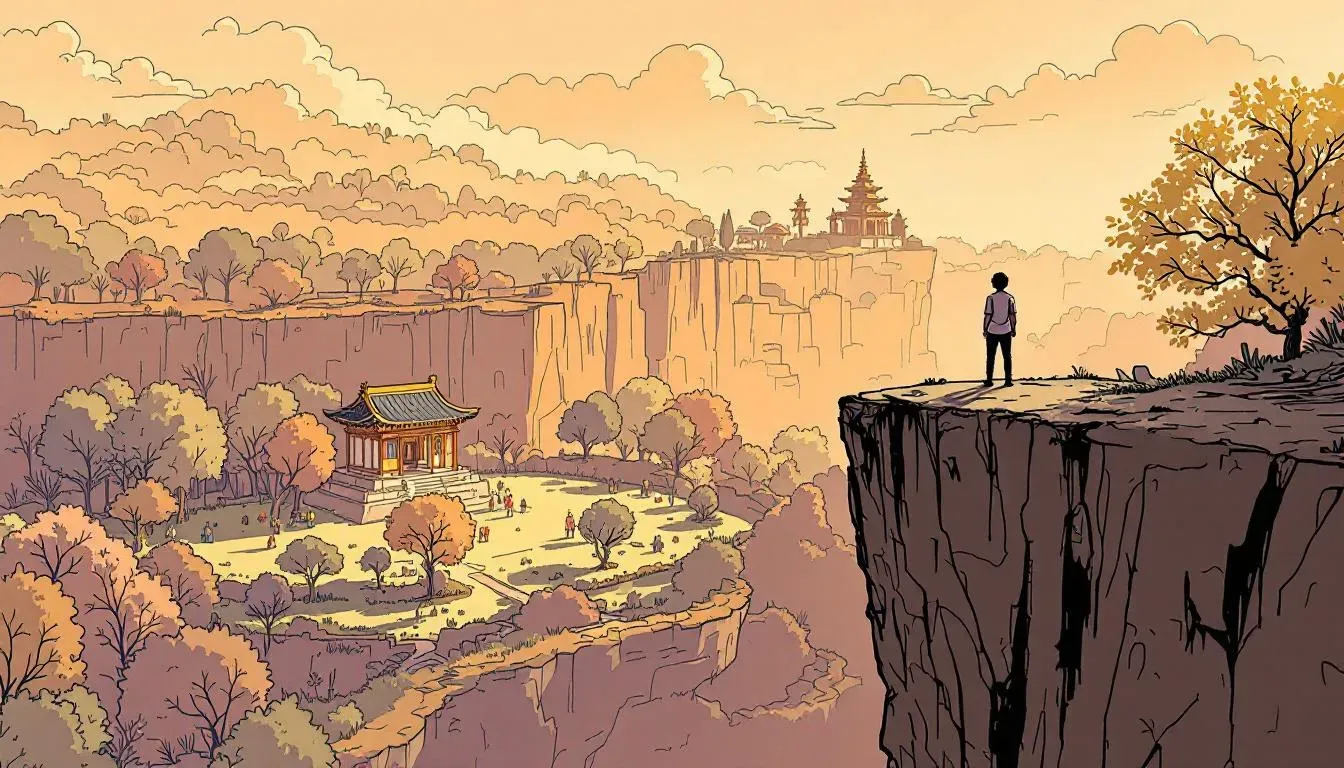
The engineering challenge was enormous. Workers carved artificial cliffs 100 feet high, created waterfalls from nothing, and built bridges spanning deep ravines. They even constructed a temple, perched dramatically on a rocky outcrop. When it opened in 1867, visitors couldn’t believe this paradise had been built from a garbage dump.
The same movement spread to other Western cities. The designer who created Central Park in New York, Frederick Law Olmsted, became famous for his park designs and influenced planners across Europe and America. Cities competed to create the most beautiful public spaces. The idea was simple but powerful: cities need green lungs to breathe, just like people do.
But this park revolution happened mainly in wealthy Western countries. Cities in developing nations often prioritized housing and commerce over green space. Different cultures had different relationships with nature - courtyards and temple gardens, but not large public parks. Climate played a role too, as some societies spent more time indoors.
The results are visible today. Cities that learned to breathe - with parks cleaning their air and providing space for people to relax - became more livable. Cities that didn’t often struggle with pollution and quality of life. About 27% of Paris is green space, compared to less than 5% in many developing world cities.
When you stand in Buttes-Chaumont today, you’re experiencing something that didn’t exist for most of human history: a city that decided its people needed room to breathe. The transformation from quarry to paradise shows how cities can reinvent themselves when they realize that green spaces aren’t luxuries - they’re as essential as lungs.
Love, Abba