The Park That Learned to Pay for Itself
Rea,
Remember yesterday morning when you read about how Buttes-Chaumont became the “lungs” of Paris? Then you redesigned Hemphill Park, adding that soccer goal and better pathways. When we actually visited Buttes-Chaumont in the afternoon, you noticed how peaceful and quiet it felt - just one small café, mostly families walking around the dramatic cliffs and waterfalls.
Today we’re visiting Bois de Boulogne, and I want you to pay attention to something completely different. This park has a wild transformation story, but it took a totally different approach to survival than Buttes-Chaumont.
During the Hundred Years’ War (1337-1453), Bois de Boulogne became a sanctuary for bandits who robbed travelers on nearby roads. The situation got so dangerous that in 1416-17, soldiers literally burned sections of the forest to flush out the criminals. They set fire to parts of what had been a royal hunting ground just to make it safe again.
When Napoleon III and Baron Haussmann redesigned it starting in 1852 (around the same time as Buttes-Chaumont), they made an interesting choice. They could have created another purely natural space like Buttes-Chaumont, focused entirely on beauty and tranquility.
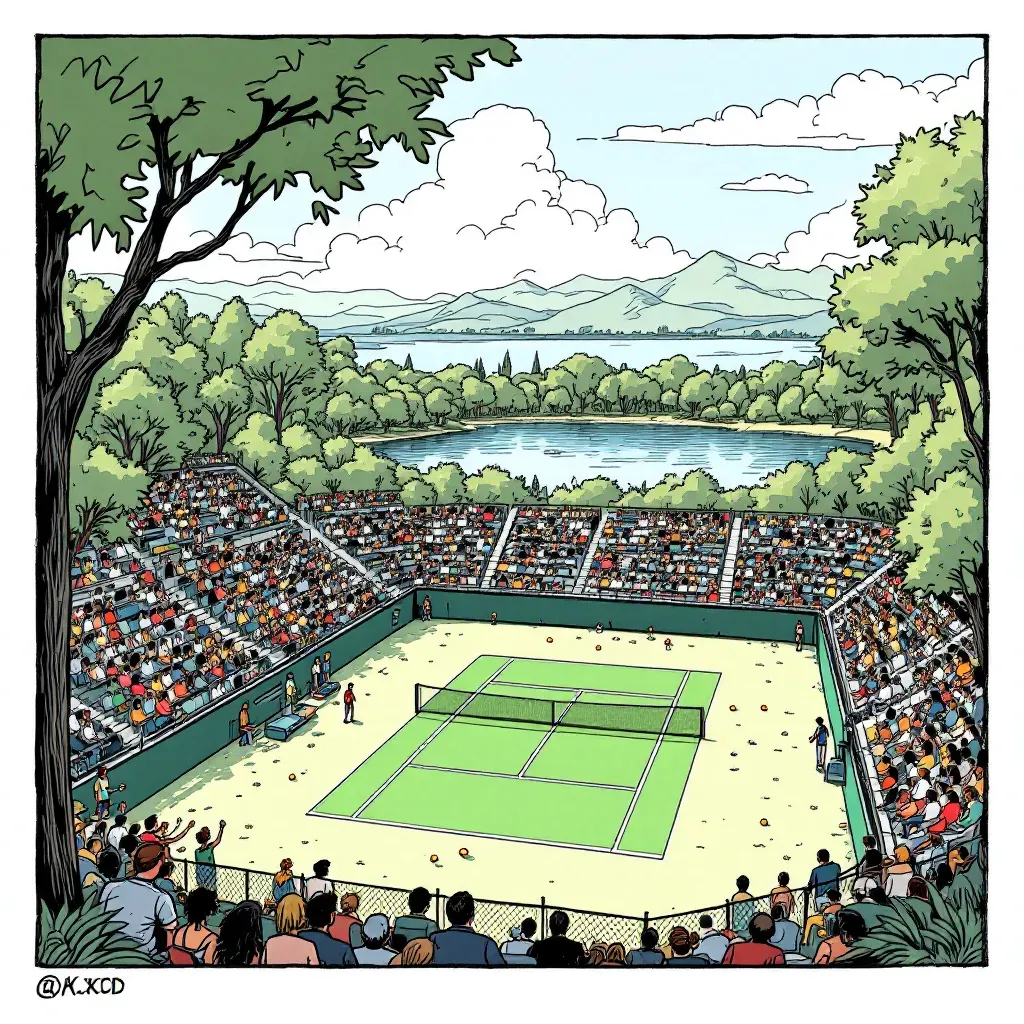
Instead, Haussmann designed Bois de Boulogne with multiple ways for people to spend money. He created artificial lakes where people could rent boats. He built the Longchamp racecourse where wealthy Parisians would bet on horses. Later, the city added Roland Garros tennis stadium, restaurants, and other commercial activities.
This created two very different park experiences. Buttes-Chaumont offers mostly pure nature - dramatic landscapes with minimal commerce. Bois de Boulogne combines nature with business - tennis tournaments, fancy restaurants, boat rentals, and horse racing alongside forests and lakes.
As a designer, which approach do you think works better? Yesterday at Buttes-Chaumont, you experienced pure parkland - dramatic landscapes, peaceful paths, minimal commerce. Today you’ll see a park that’s also a business - tennis matches, fancy restaurants, busy boat docks alongside the trees and trails.
Both parks transformed from dangerous places (quarry and bandit forest) into green spaces for everyone to enjoy. But they represent different philosophies about what a park should be. Buttes-Chaumont prioritizes the pure nature experience. Bois de Boulogne blends nature with entertainment and commerce.
When you added that soccer goal to Hemphill Park yesterday, you were thinking like Buttes-Chaumont - focusing on what would make the space better for families. But what if you thought like Bois de Boulogne? Could youth soccer leagues pay fees to use your improved field? Would that help maintain the park, or would it make it less accessible to kids who can’t afford to play?
The question every city faces is finding the right balance. How much commercial activity feels appropriate in a park? At what point does a park stop feeling like a natural escape and start feeling like a shopping center with trees? Today, as we walk through Bois de Boulogne, notice how it tries to be both a forest and an entertainment destination - and decide which approach you’d want for the park near our house.
Love, Abba