When Stairs Told Your Story
Rea,
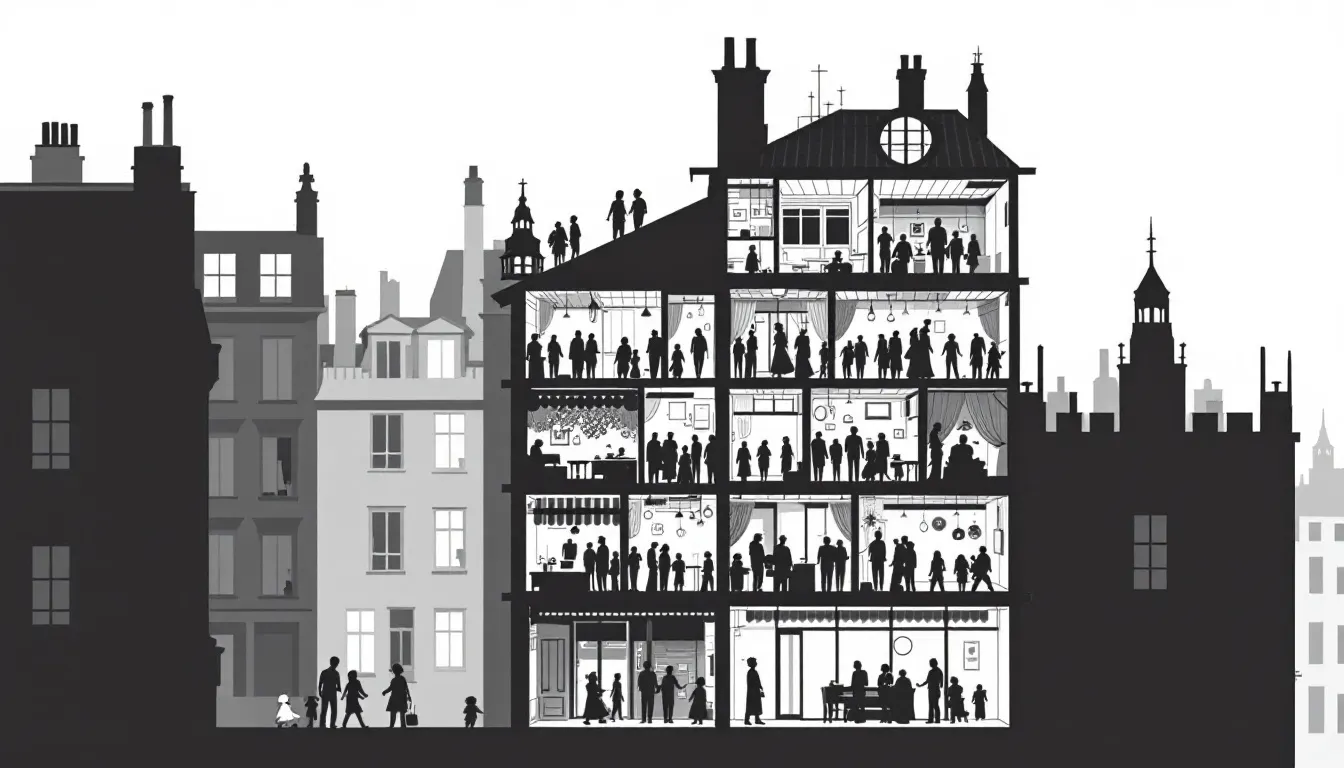
You know how we climb five flights of stairs every day to our apartment? By the time we reach our door, we’re usually a bit out of breath. But 200 years ago in Paris, those five flights would have told everyone exactly how much money your family had.
In old Paris, the higher you lived, the poorer you were. Rich families claimed the second floor - called the “premier étage” - with its high ceilings, ornate moldings, and easy access from the street. Each floor up meant less money, smaller rooms, and more daily stair climbing. The middle class lived on floors three and four. Working families climbed to the fifth floor. Servants squeezed into tiny rooms under the roof, climbing six or seven flights multiple times each day.
Your daily stair climb was literally a measure of your social status. The wealthy never had to get winded - that was for poor people.
These old buildings created a chaotic cityscape. Some stood three stories tall, others reached seven, built however their owners wanted. Streets were so narrow that people on top floors could lean out their windows and shake hands across the street. Without building codes, structures leaned dangerously, and upper floors stayed dark and airless even during the day.
In 1853, Baron Haussmann decided every building in Paris should look exactly the same. He mandated six-story buildings with limestone facades, wrought-iron balconies, and distinctive zinc roofs. Specific rules governed window sizes, balcony placement, and roof angles. Workers demolished over 12,000 old buildings and constructed new ones following his precise template.
The transformation created the uniform Paris streetscape you see outside our window today. Every building on our street follows Haussmann’s 170-year-old rules - same height, same materials, same architectural details. The beautiful consistency came from one person’s vision of how a city should look.
But it came at a cost. Thousands of families lost their homes with little compensation, pushed to Paris’s outer neighborhoods. The floor-based social hierarchy initially remained - rich families still avoided the climb to upper floors, even in the beautiful new buildings.
Today, Paris still enforces strict building codes based on Haussmann’s rules. Central Paris limits building heights to six or seven stories. New construction must use limestone facades and zinc roofs to match the historic aesthetic. Compare this to London, where modern glass towers rise next to medieval churches, or New York, where each generation builds in completely different styles.
Some argue these rules preserve Paris’s beauty and UNESCO World Heritage status. Others say they stifle creativity and make housing expensive, forcing modern architects to work within 150-year-old design constraints.
As you look out our window at the uniform limestone buildings with their matching balconies and zinc roofs, you’re seeing the result of one man’s vision from 170 years ago. Every building follows rules he created. Is it better for a city to enforce how buildings should look to create beauty everyone can enjoy? Or should each generation be free to build in their own style, even if it means less harmony?
Love, Abba