When Cars Learned to Wear Name Tags
Rea,
Walking around Paris, you’ve probably noticed the license plates look different from the ones back home. That blue strip with the EU stars, the “F” for France, and those numbers on the right showing which département the car comes from. Each plate tells a little story about where that car belongs.
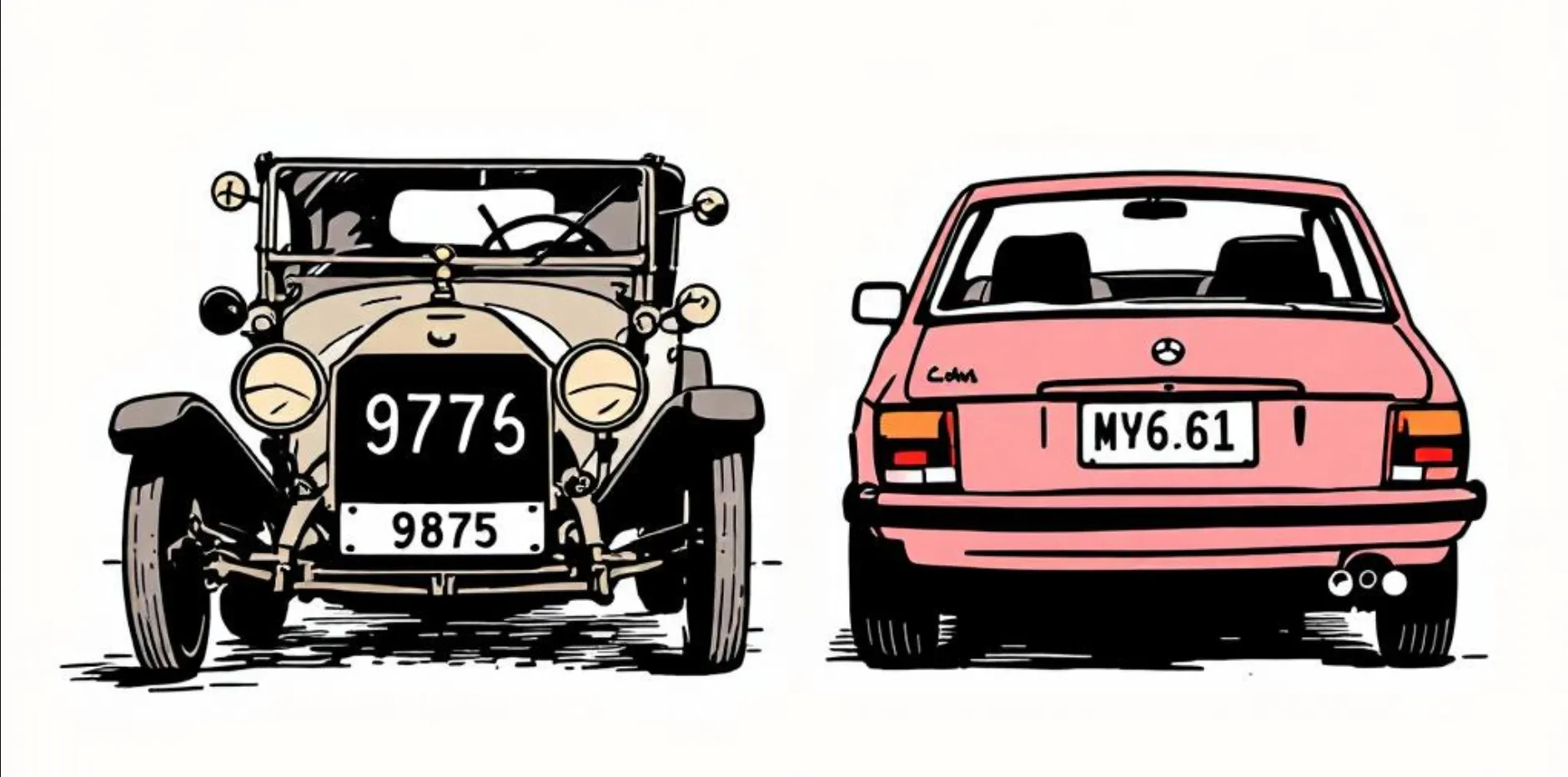
But cars didn’t always wear these metal name tags. Back in 1900, when automobiles first started puttering down roads, there were so few of them that everyone knew whose car was whose. Just like how people in small towns recognized each other’s horses and carriages, early car owners were easily identified by their unique vehicles.
The problem started as cars multiplied. By 1901, New York had enough automobiles that accidents were happening with no way to identify the vehicles involved. The state came up with a simple solution: car owners had to register their vehicles and display their initials on a plate they made themselves. Jacob German got the first license - “1” - and had to paint his initials on a piece of metal.
Within a few years, every state and country faced the same challenge. But each solved it differently, creating a fascinating variety of identification systems.
The United States let each state design its own plates. New Hampshire chose “Live Free or Die” as their motto. Arizona painted desert sunsets. Each state turned their license plates into mini-billboards showing local pride.
Britain developed a clever code system. Their plates tell you exactly when and where a car was registered. The first two letters show the region, the next two numbers reveal the car’s age, and the final three letters are random. You can look at any British plate and know whether that car is from London or Manchester, and whether it was bought in spring or fall.
France chose regional identity. Those numbers you see on the right represent the 101 départements. A car with “75” comes from Paris, while “13” means Marseille. French drivers can choose to keep their original département number even when they move, like keeping your hometown on your jersey.
When you visit Saudi Arabia, you’ll see license plates with Arabic script reading right to left - three Arabic letters followed by three numbers, like reading a book backwards from an English perspective. In India, plates use only English letters but tell you exactly where the car comes from: “DL 01 AB 1234” means Delhi, while “MH 12 CD 5678” comes from Maharashtra. Malaysia gives each state a letter code - “J 5678 B” is from Johor, while “P 9012 C” comes from Penang.
What started as a simple identification problem became a reflection of each country’s culture, language, and values. Some countries prioritize regional pride, others focus on practical information, and a few turn plates into artistic expressions.
Every license plate is essentially a tiny flag, carrying information about where that car calls home. Like people carrying passports, cars now wear their identity on metal rectangles, telling stories about the places and cultures they represent.
Love, Abba